Portugal is a country that rewards curiosity, with far more to it than the pastel streets of Lisbon. Head inland and along the coast and you’ll find a chapel lined with thousands of bones, a village built between giant granite boulders, wild beaches under dramatic cliffs and a fishing port standing on stilts above the mud. The people are warm and welcoming, the seafood is fresh and the pace of life is relaxed. It’s a compact country, but these spots are spread out, so a car and a few extra days will help you fit them all in. Come with an open mind, good walking shoes and an appetite, and you’ll find something for everyone, from history lovers and hikers to surfers and food fans.
Community Tips For Portugal & the Hidden Gems
Monsanto, Praia da Ursa and Carrasqueira are hard to reach by public transport, so hiring a car makes this route far easier.
Many Portuguese motorways use electronic-only tolls, so ask your rental company about a Via Verde transponder when you book.
The Alentejo gets very hot in summer, and the Atlantic coast is windy with cold water, even on sunny days.
If arriving by air, Porto and Lisbon airports are very user friendly and located very close to the city centre.
In Monsanto, the path is steep and cobbled, so sturdy shoes are a must to avoid slipping.
The lantern-lit walk at night, also in Monsanto, is a must. The whole village glows, see for yourself!
In Praia da Ursa, swimming is not recommended as the waves are rough, the water is strong and there are no lifeguards present. Take photos and sunbathe instead. There are also no facilities of any kind, so remember to bring food, water and any other essentials that you might need.
Ericeira is the only town in Europe whose coastline has been formally designated a World Surfing Reserve, so still visit, even if you don’t like surfing as watching the waves from the cliffs and the harbour is still cool.
There are many other more regular places to visit in Portugal too including Cascais and the Douro Valley. If this is of interest too, then please look at one of our other guides here.
Explore Portugal’s Hidden Gems
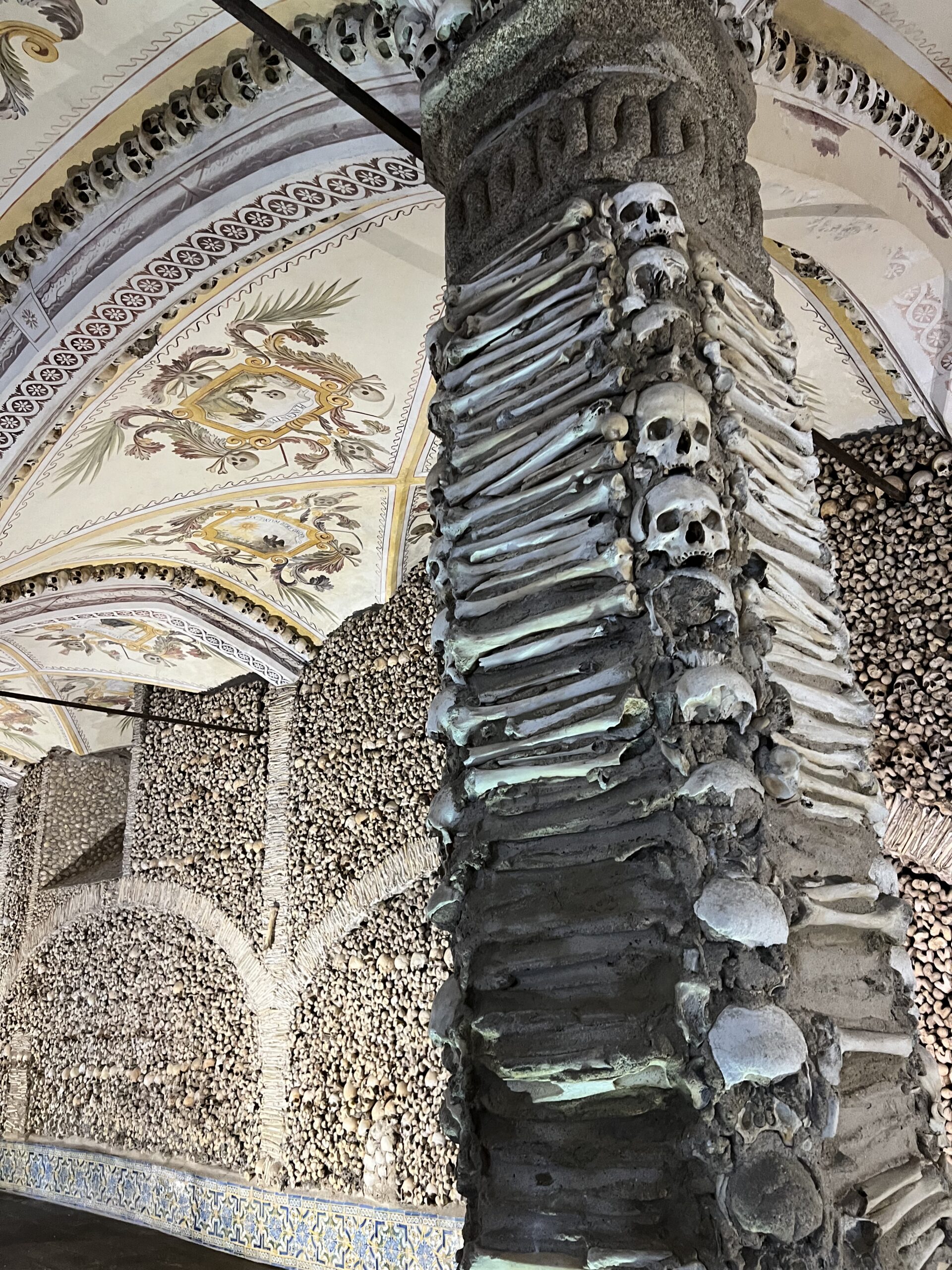
Chapel of Bones (Évora)
The walls and pillars of the chapel are covered in thousands of human bones and skulls. In total there are around 5,000 skulls, along with countless other bones.
The bones and skulls, carefully arranged and held together with cement, cover the walls and the eight pillars.
Three Franciscan friars founded the Chapel of Bones in the 17th century. Their aim was to remind visitors how brief and fragile human life is. This idea, known asmemento mori(“remember that you will die”), was central to Baroque religious thought and the chapel expresses it in the most direct way possible.
The reason bones were available in such numbers is practical. Historical accounts say that in the 16th century Évora had around 42 monastic cemeteries, which took up a great deal of space in the city. To free that land, the monks exhumed the remains and used them to build and decorate the chapel. The bones came from graves in the convent church and from other churches and cemeteries around Évora.
Before you take in the bones, you will notice the message above the entrance: “We bones that are here, for yours we wait.“
Évora is an easy day trip from Lisbon, but it is worth staying longer if you can. Walk around the old town to see the Roman Temple and the cathedral, both within walking distance of the Chapel of Bones.
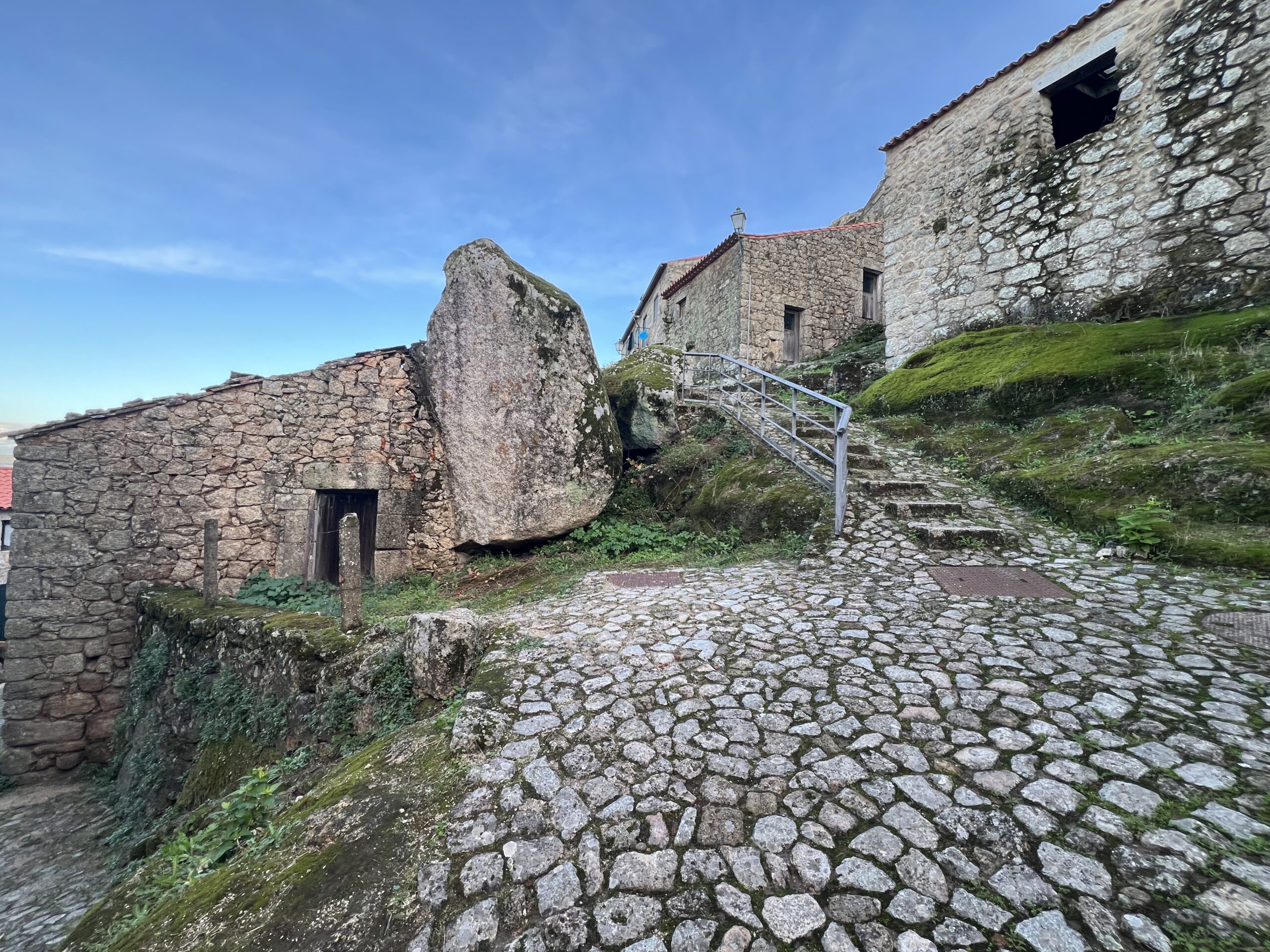
Monsanto (The Boulder Village)
Named one of Portugal’s official Historical Villages and part of the Naturtejo UNESCO Global Geopark, it preserves centuries-old stone buildings and steep winding lanes.
Famous for houses built directly under, on and between massive granite boulders weighing up to 200 tonnes.
At the top of the village are the ruins of the hilltop castle, with views over the plains. Climb it before the sun goes down.
Monsanto works best as an overnight stay. You can see it glowing on the lantern-lit night walk and still have the village to yourself in the morning.
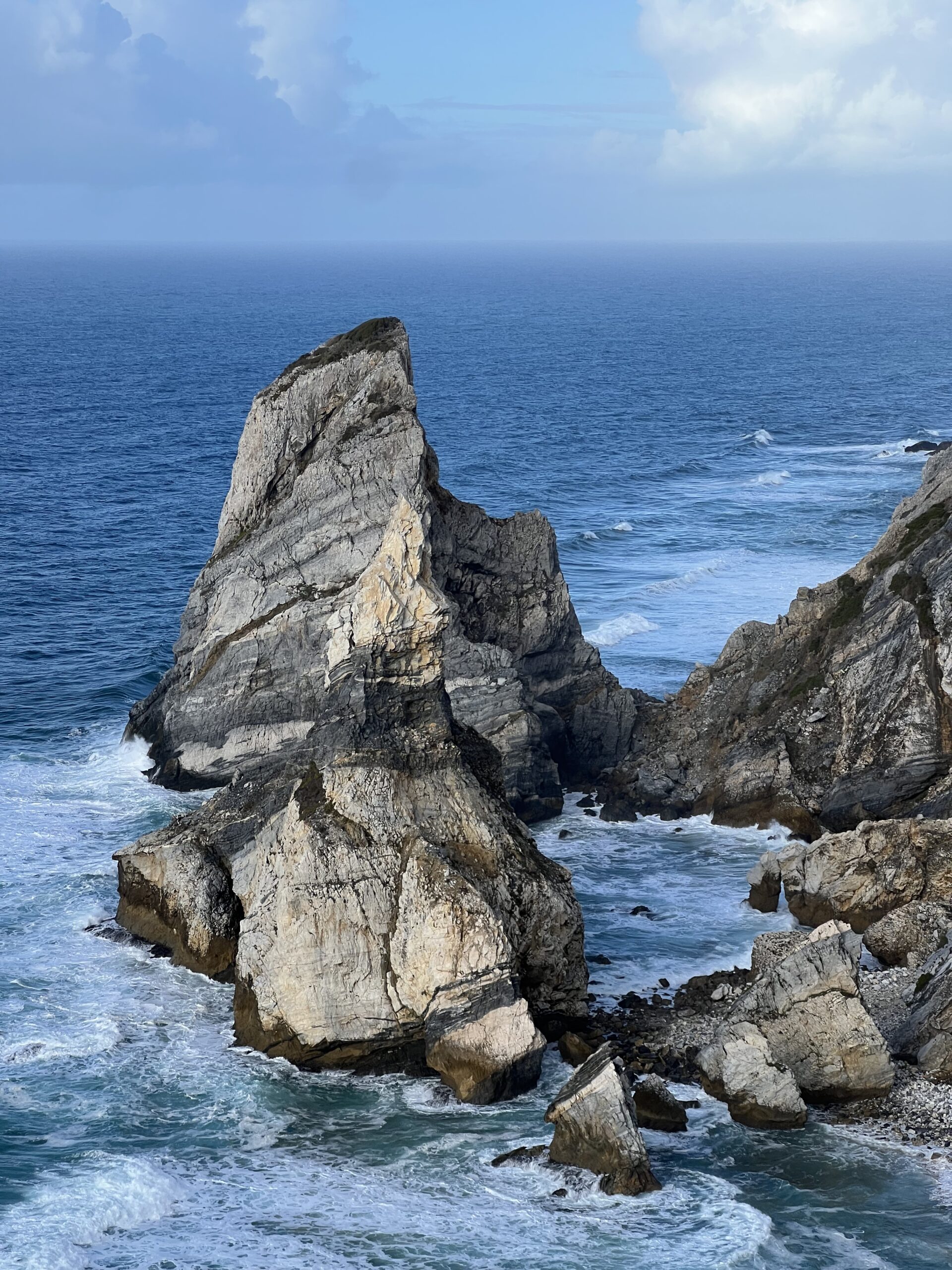
Praia da Ursa (Bear Beach)
A wild, secluded beach near Cabo da Roca in Sintra, it is famous for dramatic cliffs and towering sea stacks, including one shaped like a bear.
The hike down is moderately difficult, but worth it for spectacular views.
The beach has a hidden waterfall.
Cabo da Roca, the westernmost point of mainland Europe, is right next door, so you can see that at the same time. It is also where you can park for the beach.
Ericeira
A seaside fishing and surfing town just north of Lisbon.
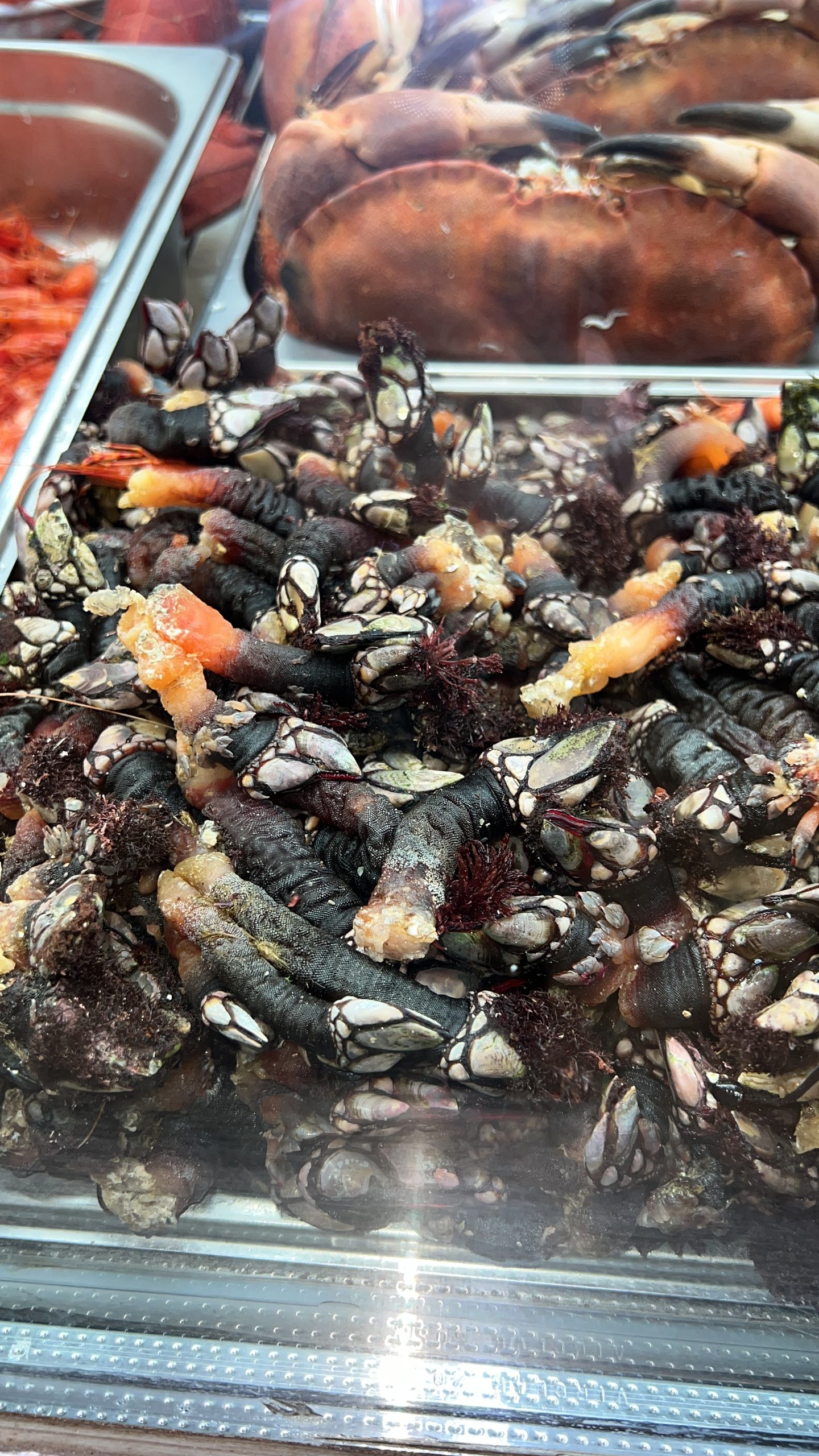
Try Percebes (goose barnacles), that only grow on a portion of the coast along the Iberian peninsula and northern Africa. They look like dragon claws.
Wander down to the harbour, where the fishing boats and the cliffs give you a good view over the coast.
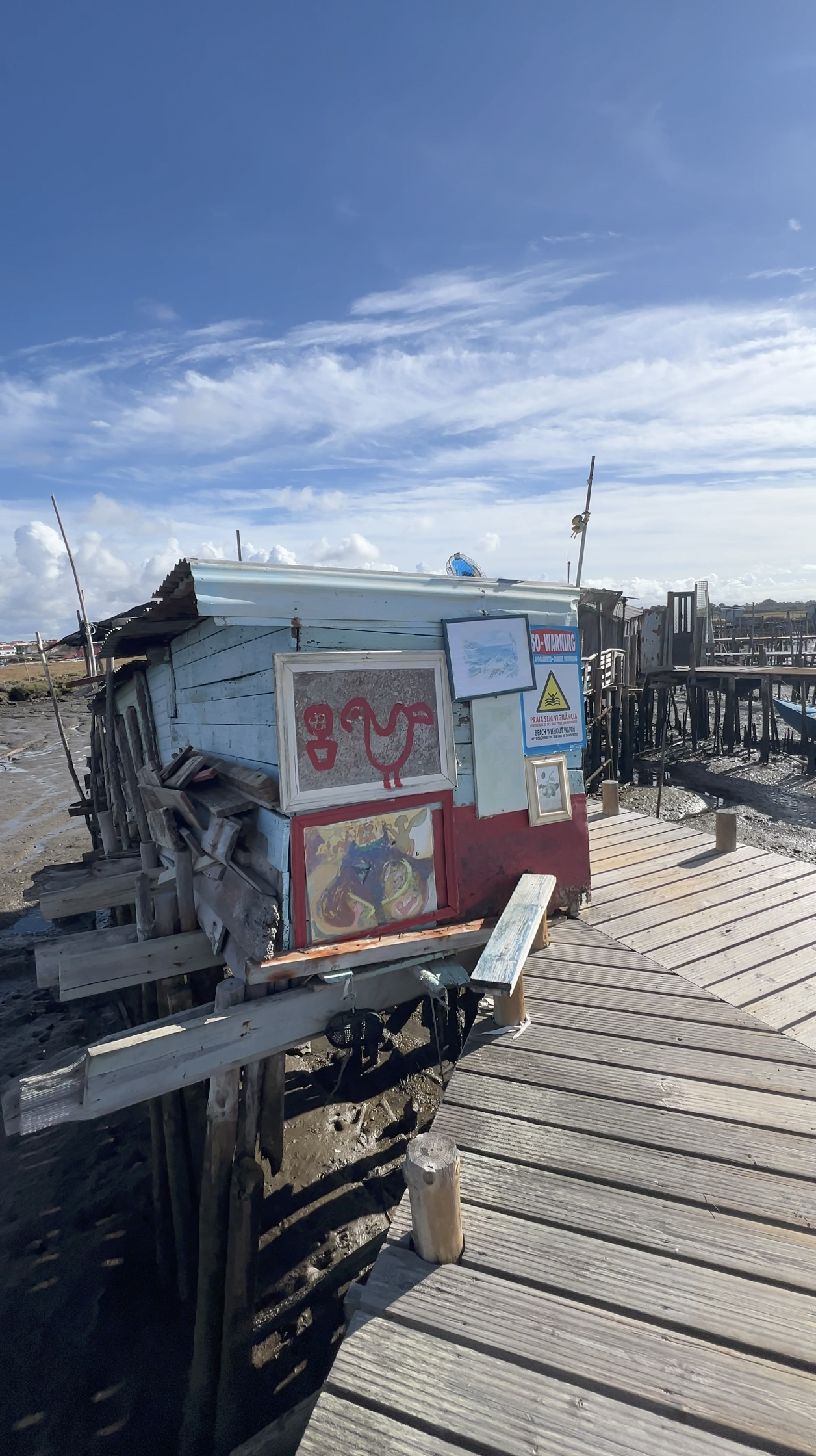
Porto Palafita da Carrasqueira
This traditional port was born during the 1950s-1960s as the local community looked for a solution to help the growing number of boats getting moored in the area during low tide. As the tide went out, fishermen would be unable to reach their boats, because the marsh was too muddy. Luckily, a creative answer was found when fishermen started burying some stacks of wood in the mud and covering them with wooden planks to make it easier to reach the shore.
The beaches and rice-field scenery of nearby Comporta are a short drive away, so combine the two for a longer experience.
Emily’s Itinerary
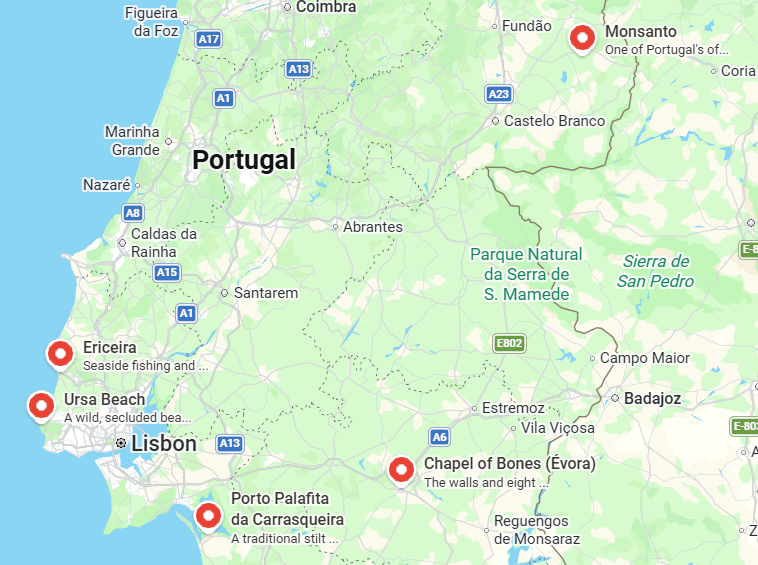
Click here or on the map above to save Emily’s itinerary into your own Google Saved maps.